There is certainly a long-lasting stereotype that the English are obsessed with tea, and whether the people of England have slowly leaned into this over the centuries or it’s always been ingrained into our culture is a topic that is always up for debate.
No matter its origin, there is no denying that we’re lost without a cuppa, and it’s rare you’ll come across a house in England that isn’t equipped for all of your tea needs, no matter your preference.
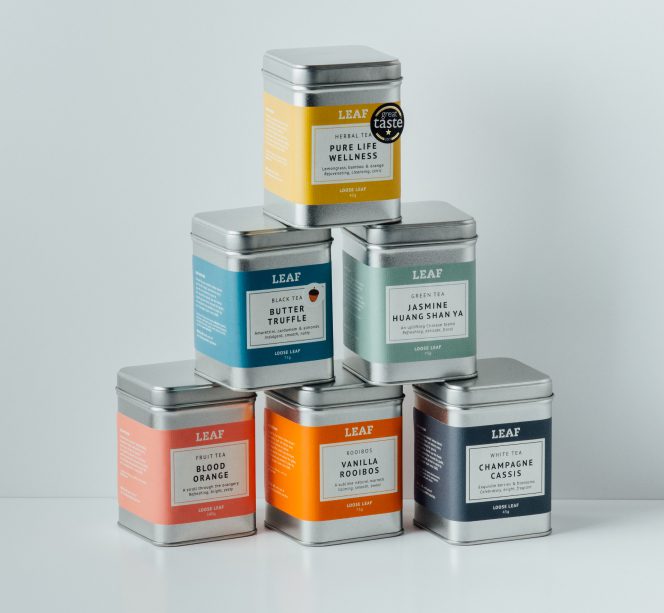
At Leaf Tea Shop, we have the same passion and love for tea, as you’d hope, which is why we are proud to stock a range of delicious teas that cater to a wide range of tastes.
Tea culture in England is something we all take great pride in, and in this guide, we will dive into its origins and discuss the top two choices for tea lovers in England.
The History and Tradition of English Tea
Tea is a huge part of English culture, and something that people all over the world fantasise about is trying a traditional British tea, but how did tea become such a large part of a country that can’t even grow it?
Where Tea Got Its Start in England
Though it feels as though it has always been part of English culture, tea was, in fact, introduced to England in the 1650s and imported by the East India Company. For centuries, in England, all tea was directly imported from China, but it has now expanded to major regions like India, Kenya and Sri Lanka.
In the 1830s, the British began cultivating their own tea in the Assam and Darjeeling regions of India in an attempt to break China’s trade monopoly, which is why we now have the two delicious tea types, Assam and Darjeeling.
When tea was first introduced to England, it was considered a rare, upper-class luxury; now it is a staple in every English household’s cupboards.
English Tea Parties
The origin of English tea parties, which have become a famous part of British culture, is attributed to a woman known as ‘The Hungry Duchess’. Anna, the Duchess of Bedford, is credited with inventing afternoon tea in the mid-1800s, when dinners were traditionally served late in the evening.
She began requesting a tray of tea, bread, and cake to help her get through the day, and she slowly began inviting friends to join her, turning the midday snack into a fashionable social gathering for the upper classes, where attendees would dress up and talk about the week’s events.
While tea was still considered a luxury product, afternoon tea was reserved for the upper classes, but has since become a much simpler affair, accessible to essentially everyone.
Understanding English Tea Types
In England, there is a wide array of teas now enjoyed in day-to-day life, from classic English Breakfast Tea to herbal and fruity varieties. Though there are plenty of teas enjoyed throughout the country, there are two teas that have the country in their hands.
English Breakfast Tea
If you ask someone to picture a classic English cuppa, chances are they are picturing English Breakfast Tea. It is the nation’s go-to, the tea that gets you out of bed in the morning and sees you through a long afternoon, and for good reason.
English Breakfast Tea is a robust, full-bodied blend, typically made from teas from Assam, Ceylon and Kenya, which together create the rich, malty flavour we all know and love. It’s typically paired with milk and has become the default choice for so many tea drinkers across the country.
Whether you take it with milk, without, strong or weak, English Breakfast Tea is the kind of tea that feels like home, and it is hard to imagine the English morning routine without it.
Earl Grey
Where English Breakfast Tea is the dependable everyday classic, Earl Grey is its more refined and sophisticated cousin. It is a black tea blend flavoured with bergamot oil, which gives it that distinctive floral, citrusy edge.
Named after British Prime Minister Charles Grey, who served in the 1830s, Earl Grey has a history as interesting as its flavour profile. Legend has it the blend was a diplomatic gift, though the true origins are, much like many great things in English history, a matter of some debate.
Earl Grey is best enjoyed without milk to allow the bergamot to really shine, though plenty of people enjoy it as it is. It’s the tea of choice for those who like something a little more aromatic, and at Leaf Tea, it is one of our most loved blends for exactly that reason.
The Art of Brewing the Perfect Cup
Want to know how we’d go about brewing the perfect cuppa? Follow the steps below.
Start with Great Tea
You might think that making a cup of tea is simple enough, and while it is certainly not complicated, there is an art to getting it just right. A great cup of tea starts with great tea, but the way you brew it makes all the difference.
In need of great tea? Check out what we have in stock.
Use Freshly Boiled Water
Start with freshly boiled water, and make sure it has actually come to a full boil rather than just getting hot. For black teas like English Breakfast and Earl Grey, boiling water is essential to properly draw out the flavour. If you are working with herbal or green teas, you will want to let the water cool slightly first, as water that is too hot can make them taste bitter.
Steeping Time Matters
When it comes to steeping time, patience pays off. A good English Breakfast Tea needs around three to five minutes to reach its full potential, while Earl Grey is often best at around three to four minutes. The longer you leave it, the stronger the flavour will become, so find your sweet spot and stick to it.
Warm Your Teapot
If you are using a teapot, we’d recommend checking out our glass teapot. Warming it first with a splash of hot water before adding your tea will keep the temperature consistent throughout the brew. This small step makes a noticeable difference, and it is the kind of detail that separates a good cup of tea from a great one.
Adding Milk
Milk, if you take it, should go in last, giving you full control over the strength before you add it. And as for the great milk-in-first debate, we will leave that one for another day.
The Traditional Afternoon Tea Experience
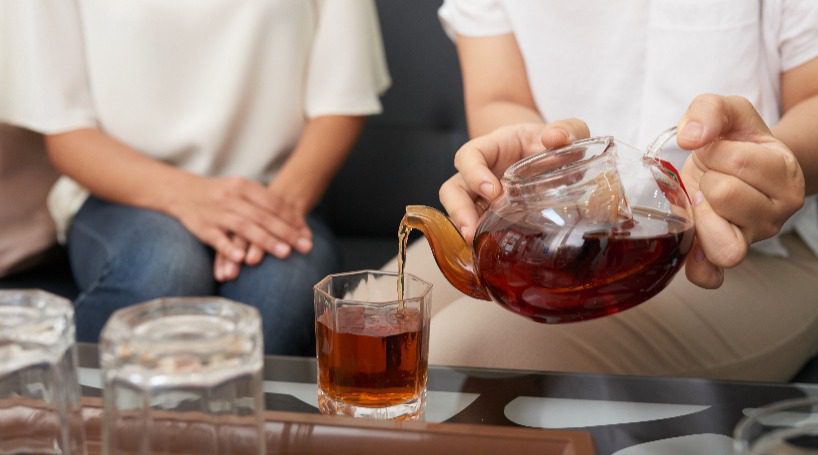
Thanks to the Duchess of Bedford’s solution to a long afternoon, afternoon tea has become one of England’s most beloved traditions, and one that continues to be celebrated in homes, hotels and tearooms across the country.
A traditional afternoon tea is served between two and five o’clock and typically consists of a pot of tea, a tiered stand of finger sandwiches, freshly baked scones with clotted cream and jam, and a selection of cakes and pastries. The order in which you enjoy them is, technically, sandwiches first, then scones, then cakes, though we appreciate that resisting a good scone is easier said than done.
The scone itself comes with its own long-standing debate, of course: cream first or jam first? The Cornish say jam first, Devon says cream first, and the rest of England largely just gets on with it and does whatever feels right. There is no wrong answer, though we expect some people reading this will strongly disagree.
Afternoon tea today is enjoyed by everyone, from a casual catch-up with friends over a pot of English Breakfast to a full hotel spread for a special occasion. It is a tradition that has evolved over the centuries without losing its charm, and at Leaf Tea, we think everyone deserves to experience it properly, starting with the very best tea in the pot.
Find Your Perfect Tea With Leaf Tea
Through this guide, you should now have a better understanding of tea and its roots in English tradition. At Leaf, we think that tea should be a part of everyone’s everyday routine, especially given the health benefits that so many offer.
Want to host your own afternoon tea or just looking to update your own tea collection? Check out the range of teas we have available or get in touch for more information.